
Craft Workshops in Torquay: Creative Activities to Try by the Coast
📌 Key Takeaways
- Craft workshops in Torquay can combine creativity with the town’s coastal and natural surroundings.
- Beachcombing-based activities are a good choice for visitors who want to use natural or found materials in their projects.
- Sea glass, shells, stones and other beach finds can inspire jewellery, decorations, artwork and keepsakes, depending on the workshop.
- Beginners do not necessarily need previous artistic experience. The most suitable classes usually provide guidance and materials.
- Glass, ceramics, painting, jewellery and mixed-media activities offer different creative experiences, so choosing by interest is more useful than choosing by popularity.
Torquay is well known for its coastline, beaches, harbour views and relaxed seaside atmosphere, but the English Riviera also offers plenty of opportunities to explore creativity. Craft workshops are a particularly enjoyable way to experience the area because they can combine hands-on making with inspiration from the surrounding landscape.
From jewellery and decorative pieces to glasswork, botanical art and crafts made from natural finds, there are different ways to spend a few hours creating something rather than simply sightseeing. For visitors staying in Torquay, a coastal craft activity can also add a more personal element to a short break.
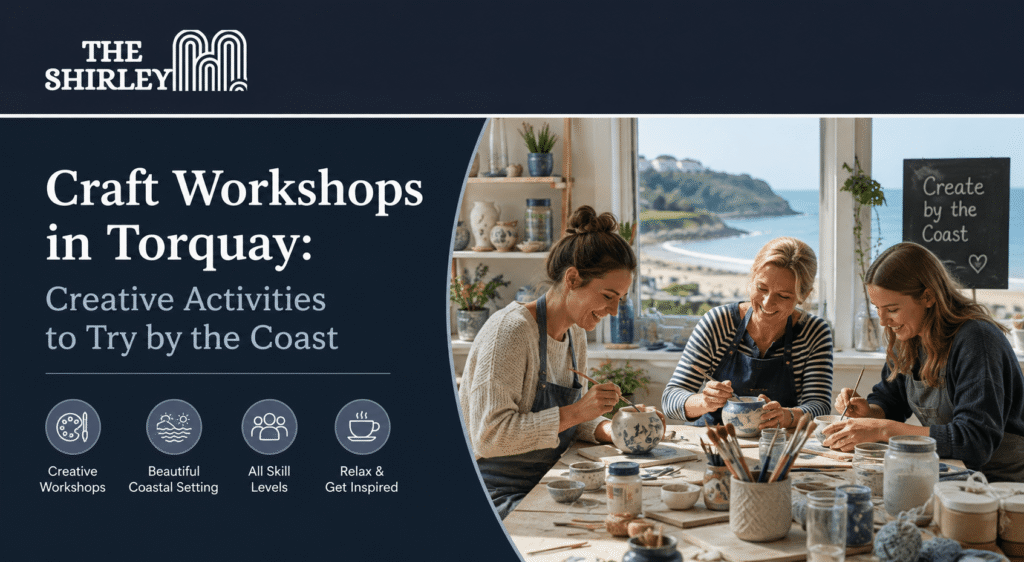
One particularly interesting option is a sea-themed crafting experience that combines beachcombing with a guided workshop. At The Shirley, for example, the Sea-Craft Workshops & Stay experience includes a local beach visit to find natural and beach-found materials before a three-hour crafting session. The workshop can include projects such as jewellery, canvas art and mobiles or sun catchers.
Why Try a Craft Workshop in Torquay?
A craft workshop offers something different from a conventional sightseeing activity. Instead of simply visiting a beach, gallery or attraction, you spend time learning a process and making something yourself.
Torquay’s coastal setting makes this particularly appealing. The colours, textures and shapes found around the English Riviera can provide natural inspiration for creative work. Pebbles, shells, sea-worn glass and other found objects can become starting points for decorative projects, while the landscape itself can inspire painting, drawing and photography.
There is also a practical benefit to choosing a workshop during a holiday. A few hours of focused making can create a change of pace between walks, sightseeing and meals. It can be social without requiring a large group, while also giving visitors something tangible to take home.
The best workshop is not necessarily the most complicated one. For many visitors, the appeal is having enough guidance to learn something new while still having freedom to make personal choices.
What Types of Craft Workshops Can You Try in Torquay?
The range of creative activities can vary depending on the season and individual workshop providers. Torquay and the surrounding area have hosted activities involving glass, ceramics, painting, botanical art and other forms of making.
Jewellery Making
Jewellery workshops can be a natural choice for visitors interested in small, personal keepsakes.
Depending on the class, materials may include beads, wire, metal components, stones, glass or found objects. A coastal-themed workshop may also use beach-inspired colours and textures.
Jewellery making can be particularly satisfying because the finished piece is small enough to take home easily. It can also be adapted to different levels of experience, from simple designs to more involved techniques.
Sea Glass and Beach-Inspired Crafts
Sea glass workshops appeal to people who like the idea of turning coastal finds into something decorative or wearable.
Sea glass is naturally weathered glass that has been smoothed over time by movement in the water and sand. Its frosted appearance and irregular shape make it interesting for creative projects.
A workshop using sea glass may involve jewellery, sun catchers, mosaics, framed artwork or other decorative pieces. However, the exact process depends on the individual class, so it is sensible to check what materials and techniques are included before booking.
A coastal crafting experience can also involve collecting suitable beach finds before the making session. The Shirley’s current Sea-Craft Workshop experience follows this type of format, with a guided local beach visit followed by a three-hour crafting workshop.
Just Read: What happens inside a sea glass workshop and why everyones talking about it.
Glass Art
Glass offers another creative direction for visitors who want to see how an everyday material can become artwork.
Around Cockington, for example, OurGlass operates from the craft centre and allows visitors to watch traditional glassblowing techniques being used to create studio glass. The English Riviera’s tourism information lists the workshop as open throughout 2026, although opening arrangements can change.
Glass activities can be especially interesting for anyone who enjoys seeing the making process as much as the finished object.
Ceramics and Clay
Clay-based workshops provide another hands-on option. Working with clay allows participants to create shapes, textures and impressions before decorating their piece.
Local workshop programmes can include nature-inspired ceramic projects. For example, a Torquay workshop listed by the English Riviera involved pressing flowers and foliage into clay to create textured wall art before glazing the finished piece.
This type of activity can appeal to visitors who enjoy working with natural forms but want something more structured than simply collecting beach finds.
Painting and Botanical Art
Not every coastal craft experience needs to involve physical materials collected from the beach.
Painting workshops can use flowers, landscapes, architecture or local scenery as inspiration. Botanical painting is one example, with recent Torquay workshop programming including guided work based on fresh garden and wild flowers.
For someone who prefers a quieter activity, a small painting class can be a good way to spend part of a day away from the busier tourist attractions.
How Does a Coastal Craft Workshop Work?
The exact process depends on the workshop, but most follow a straightforward sequence.
1. Choose the Type of Craft
Start by deciding what you actually want to make.
If you like wearable items, jewellery could be a good fit. If you prefer home decoration, a sun catcher, canvas or ceramic piece may be more suitable. People interested in learning a traditional technique may prefer glass or another specialist craft.
2. Check What Is Included
Before booking, look at the workshop description carefully.
Useful details include:
- Duration of the session
- Materials supplied
- What you will make
- Whether beginners are welcome
- Whether finished pieces can be taken home immediately
- Whether a finished item needs additional drying, firing or processing
- Age or accessibility requirements
- Cancellation arrangements
- Whether the workshop is indoors or partly outdoors
These details can make a significant difference to the experience.
3. Explore the Local Environment
Coastal workshops may include time outside before the creative session.
Beachcombing can be an enjoyable part of the experience because it encourages you to notice small details that might otherwise be overlooked. Instead of simply walking along the beach, you start looking at colours, textures, shapes and unusual natural objects.
If a workshop includes collecting materials, follow the organiser’s guidance about what is appropriate to take. Not every object found on a beach should automatically be removed from its environment.
4. Learn the Technique
The instructor should explain the basic process before you begin.
A well-structured beginner workshop does not require you to arrive as an experienced artist. The purpose is usually to understand the technique well enough to make informed creative choices.
Do not worry about making your piece look exactly like an example. Handmade work is naturally individual, and small differences are part of its character.
5. Create and Personalise Your Piece
Once the basic technique is understood, you can make decisions about colours, shapes, arrangements and finishes.
This is often the most enjoyable stage because the activity becomes less about following instructions and more about creating something that reflects your own preferences.
What Makes Sea Glass Interesting for Coastal Crafts?
Sea glass has a distinctive appearance because naturally weathered pieces develop softened edges and a frosted surface.
For craft projects, its appeal comes from several characteristics:
- Each piece has its own shape.
- Colours can range from common pale tones to less frequently encountered shades.
- The material has a strong connection with the sea.
- Small pieces can work well in jewellery and decorative projects.
- Irregular shapes can add character to handmade designs.
The important point is that sea glass is not simply decorative material. For many people, it also carries a sense of place. A piece associated with a coastal visit can become a reminder of the holiday itself.
That makes sea-glass-inspired crafts particularly suitable for visitors looking for a souvenir that feels personal rather than mass-produced.
Are Craft Workshops Suitable for Beginners?
Yes. Many craft workshops are designed to introduce people to a technique rather than assume previous experience.
A beginner-friendly session should explain the process clearly, provide appropriate materials and allow enough time to complete the project without unnecessary pressure.
If you have never attended a workshop before, look for descriptions that mention:
- Beginner-friendly instruction
- Guided or step-by-step teaching
- Materials included
- Small or manageable projects
- A finished item to take home
- Clear information about what you need to bring
You should also be realistic about the type of craft. Some specialist techniques require more practice than others. A single workshop can provide an introduction, but developing genuine skill may take repeated practice.
The goal of a holiday workshop is often to experience the process, learn a new skill and enjoy creating something rather than becoming an expert in one afternoon.
Also Read: Where can i join craft workshops near the sea.
How Long Should You Allow for a Craft Activity?
Allow more time than the actual making session if the experience includes travel, refreshments, beachcombing or preparation.
For example, The Shirley’s current one-day crafting package combines arrival and refreshments, a beachcombing visit, a Devon cream tea and an afternoon crafting session. Its listed two-night package similarly combines accommodation with a guided beach visit and a three-hour workshop.
This type of schedule can work well for visitors who want the craft activity to become part of the day rather than something squeezed between several attractions.
If you are booking a standalone class, allow extra time before and after the advertised workshop duration, particularly if you need to travel to the venue.
How Can You Choose the Right Craft Workshop?
The easiest way to choose is to work backwards from the experience you want.
Choose by the finished item
Think about what you would actually like to take home.
A piece of jewellery, artwork, ceramic decoration or sun catcher can all make meaningful holiday keepsakes, but they suit different tastes.
Choose by the process
Some people enjoy detailed, precise work. Others prefer painting, arranging materials or working with clay.
Look at the description of the activity itself rather than choosing based only on the name.
Choose by the setting
A workshop in a studio offers a different experience from one that begins with a coastal walk or beachcombing session.
If the surrounding landscape is an important part of your holiday, a coastal or nature-inspired activity may feel more connected to the destination.
Choose by the time available
A short class may be easier to fit into a sightseeing-heavy itinerary. A half-day or full-day experience can be better if you want the workshop itself to be one of the main activities of your trip.
Check practical requirements
Always check the latest booking information before travelling. Workshop dates, prices, materials and availability can change, particularly for seasonal activities.
Why Combine a Craft Workshop With a Torquay Stay?
A workshop can become more enjoyable when it is part of a slower-paced break rather than a standalone appointment.
Torquay offers a mixture of coastal scenery, walking routes, cultural attractions and independent creative spaces, so visitors can build a varied itinerary around a workshop.
A beach-based crafting experience is especially easy to connect with the wider character of the English Riviera. You might spend part of the day exploring the coast, then move into a creative activity where those surroundings influence what you make.
For visitors staying at The Shirley, the Sea-Craft Workshops & Stay package is designed around this combination. The listed experience includes a guided local beach visit, coastal walking and a three-hour sea-treasure crafting session, with possible projects including jewellery, canvas art and mobiles or sun catchers.
This makes the craft activity part of the overall stay rather than simply another item on a sightseeing checklist.
What Should You Bring to a Craft Workshop?
The requirements vary, so check the individual workshop before travelling.
For many beginner sessions, the main things to consider are practical rather than specialist.
You may want to bring:
- Comfortable clothing that you do not mind working in
- Suitable footwear if the experience includes beachcombing
- A small bag for personal belongings
- Any personal beach finds the organiser has specifically said you may bring
- A notebook or phone if you want to record techniques for later practice
Do not assume that you need to purchase specialist equipment beforehand. Many workshops supply the core materials and tools, particularly when the session is designed for beginners.
Can a Craft Workshop Be a Good Holiday Souvenir?
Absolutely. Handmade items can make useful souvenirs because they are connected to the experience of making them.
A shop-bought souvenir may remind you that you visited Torquay. Something you created during a coastal workshop can also remind you of the activity itself, the materials you worked with and the time you spent exploring the area.
This is one reason beach-inspired crafts can be particularly appealing. A finished piece can capture colours, textures or materials associated with the coastline without simply reproducing a standard tourist design.
For couples, families and small groups, the activity can also become part of the shared memory of the trip.
Frequently Asked Questions
What are the best craft workshops in Torquay?
The best workshop depends on your interests. Options can include jewellery making, glass-related activities, ceramics, painting, botanical art and crafts using natural or beach-found materials. Check the latest local listings and individual workshop information before booking.
Are sea glass workshops suitable for beginners?
Many sea-glass-based craft activities can be suitable for beginners because the focus is often on learning a particular technique and creating a manageable project. Always check the individual workshop description to understand the level of instruction provided.
Can you find sea glass in Torquay?
Sea glass may be found on beaches, but finding particular colours, sizes or quantities cannot be guaranteed. If a workshop includes beachcombing, follow the organiser’s guidance about suitable finds and responsible collecting.
Do craft workshops provide materials?
Many workshops include the materials needed for the advertised project, but this varies. Always check the booking information to see what is supplied and whether you need to bring anything yourself.
Do I need previous crafting experience?
Not necessarily. Many workshops are designed for beginners and provide guided instruction. Specialist or advanced classes may have different requirements, so check before booking.
How long do craft workshops usually last?
There is no single standard duration. A workshop may last a couple of hours, a half day or longer. Experiences that include beachcombing, refreshments or accommodation can take up most of a day.
What can you make in a coastal craft workshop?
Depending on the activity, you might make jewellery, artwork, sun catchers, mobiles, ceramics or other decorative pieces. The available projects depend on the individual workshop and materials being used.
Are craft workshops good for a Torquay short break?
Yes. A workshop can add a creative activity to a coastal itinerary and provide a change of pace from sightseeing. It can be particularly appealing when combined with accommodation, walking or a beach visit.
Where can I find more information about sea-craft experiences in Torquay?
Visitors interested in a coastal crafting experience can explore the Sea-Craft Workshops & Stay information from The Shirley for current package details, available dates and booking information.
Make Creativity Part of Your Torquay Break
Torquay offers more than traditional seaside sightseeing. A craft workshop can encourage you to slow down, explore the coastal environment more closely and create something connected to the place you are visiting.
Whether your interest lies in jewellery, ceramics, glass, painting or sea-inspired crafts, the right workshop can turn a few hours into a memorable part of your holiday. For anyone particularly interested in combining beachcombing with hands-on making, The Shirley’s Sea-Craft Workshops & Stay experience provides one option to explore.
For current details about the experience, accommodation and available workshop dates, visit The Shirley and plan a creative addition to your Torquay stay.